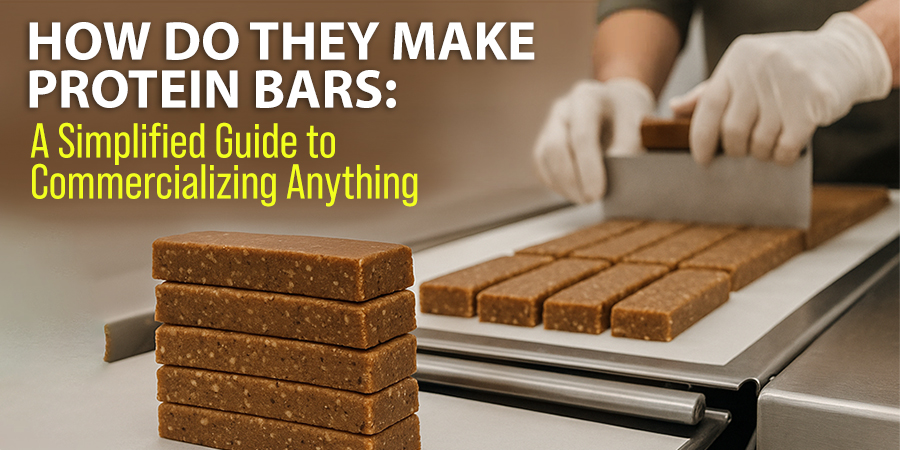
Protein bars are one of the trending products today in the market. The more people become health-conscious with busy lifestyles, the faster there is to be an easy-to-grab snack for them. Gym-goers prefer protein bars after workout sessions, whereas busy professionals have to grab one while running from one meeting to another. A fairly complicated process is involved in bringing every delicious protein chocolate bar to life. So, whether you are interested in entering the protein bar manufacturing business or just wish to know how they are made at the commercial level, this guide takes you through every step of the manufacturing process and you will find out more about how to make protein bar.
Protein Bar Manufacturing Process
Step 1: Recipe Development & Formulation
To create a nutritional protein bar with taste, stability, and shelf life.
Methodology:
Usually, first, a recipe is made by weighing elements of taste and nutrition. Then, the ingredients are chosen with their quality in mind; that consists of, among others:
Protein sources: Whey isolate, Pea protein, Soy protein.
What It Does:
You need to build a proper formula before the actual production phase so that there is a balance between:
- Protein Sources: Whey isolate protein, soy protein, pea protein, brown rice protein, and casein.
- Binders: Dates, honey, agave syrup, or brown rice syrup; these bind ingredients together.
- Fillers and Fibers: Rolled oats, flaxseeds, psyllium husk, or inulin offer a filler sensation and support gut health.
- Good Fat Sources: Almond butter, peanut butter, and coconut oil.
- Flavor & Texture Additions: Cocoa powder, vanilla extract, dried fruits, chocolate chips, or natural sweeteners.
- Preservatives & Stabilizers (if applicable): Used to maximize shelf life in commercial production.
Note: Recipes must comply with local FSSAI/USFDA guidelines and must be lab-tested for nutritional claims.
Step 2: Ingredient Sourcing and Quality Control
Objective:
Ensure raw materials meet quality, safety, and nutritional standards.
What it Involves:
Sourcing is crucial if you are wondering about how do you make protein bars .Manufacturers should buy bulk quantities from reliable suppliers that have valid certifications such as organic, non-GMO, or gluten-free.
- Flavor & Texture Additions: Additions could be cocoa powder, vanilla extract, dried fruits, chocolate chips, or natural sweeteners.
- Preservatives & Stabilizers (If Needed): Commercial production would require a longer shelf life.
- Legal Note: Recipes have to comply with local-level FSSAI/USFDA standards and are required to get tested for nutrition claims from an approved NABL lab.
- Step 2: Sourcing and Quality Control of Ingredients
- The Objective: To maintain quality, safety, and nutritional standards in all raw materials.
What It Involves:
The very core of sourcing should be highlighted on how to make healthy protein bars. Manufacturers have to procure the ingredients in bulk from trusted suppliers equipped with sound certificates (organic, non-GMO, gluten-free, and so on).
- Each batch should pass through:
- Moisture Content Check
- Microbial Testing
- Heavy Metal Testing (especially for plant-based proteins)
- Nutritional Consistency Audit
There should be a Certificate of Analysis (CoA) accompanying each raw material.
Step 3: Weighing & Pre-Mixing
Objective:
To match ingredients in precise proportions to maintain product consistency.
What it Involves:
All dry and wet ingredients are weighed using high-precision digital scales based on the recipe. The sequence of adding ingredients can impact texture and taste, so a pre-mixing step is done.
For Example:
- Dry ingredients (protein powders, oats, seeds) are first blended.
- Separately, wet ingredients (binders like honey or nut butter) are melted and mixed.
- Both are combined to form a uniform dough or slurry.
- Industrial ribbon blenders or paddle mixers are commonly used in commercial settings.
Step 4: Mixing & Kneading
To achieve a uniform and cohesive mixture ready for shaping.
What it Involves:
The dough is mixed thoroughly to avoid ingredient separation. At this stage, temperature and viscosity are monitored.
Some Key Notes:
- Over-mixing can make the bars dry.
- Under-mixing results in uneven protein distribution.
- Large-scale manufacturers use planetary mixers or double-arm kneaders for uniformity.
Step 5: Shaping & Molding
Objective:
To form the dough into uniform bar shapes with accurate weight.
What it Involves:
The dough is fed into automated extruders or roller-forming machines. These machines cut and mold the mixture into desired sizes and shapes.
Common Methods include:
- Cold Extrusion: For raw bars with natural ingredients.
- Roller & Slitter System: The Dough is rolled flat and then cut into rectangular bars.
- Mold & Press: Especially useful for high-fat, nut-based bars.
Shaping also includes optional garnishing — such as drizzling chocolate, sprinkling seeds, or adding coating layers.
Step 6: Baking or Cooling (If Applicable)
Objective:
To set or bake the bars depending on the recipe type.
What it Involves:
There are three types of protein bars:
- Baked Bars: Cooked in convection ovens at moderate heat to improve shelf life and texture.
- Cold-Pressed or Raw Bars: Not baked, but cooled in refrigeration or blast freezers.
- Coated Bars: May be passed through a cooling tunnel after coating with chocolate or yogurt.
Baking time and temperature are monitored to retain protein structure and taste.
Step 7: Coating & Topping (Optional)
Objective:
To enhance flavor, appearance, and market appeal.
What it Involves:
Some bars are half-dipped or fully coated with dark chocolate, caramel, or flavored coatings.
Steps include:
- Melting the coating (usually in a melting tank)
- Applying through enrobing machines
- Passing through cooling tunnels to harden
This step is mostly skipped for clean-label or vegan bars.
Step 8: Cutting & Sizing
Objective:
To ensure precise dimensions and weights for each bar.
What it Involves:
After molding or baking, bars may expand slightly. So final cutting is done using:
- Ultrasonic Cutters: For clean edges and soft textures
- Rotary Blades or Guillotine Cutters: In high-speed conveyor systems
Accurate sizing is critical for legal compliance with label weight and serving size.
Step 9: Packaging
Objective:
To extend shelf life, ensure hygiene, and improve branding.
What it Involves:
Bars are passed through flow-wrapping machines that pack them in air-tight, laminated wrappers with printed labels.
Key Packaging Types:
- Individual Wraps (for single bars)
- Multipacks or Display Boxes (for retail shelves)
Nitrogen flushing is often used to prevent oxidation and spoilage.
Labeling Requirements Include:
- Ingredients list
- Nutrition facts
- Batch number
- Expiry date
- Certifications (FSSAI, FDA, Organic, etc.)
Step 10: Quality Testing & Dispatch
Objective:
To ensure the finished product meets safety and quality standards.
What it Involves:
Before shipment, each production batch undergoes:
- Microbiological tests
- Shelf-life analysis
- Taste panel review
- Bar weight and seal integrity check
Once approved, the bars are packed in secondary packaging and shipped to distributors or retailers.
Tips for Scaling Up
- Invest in Automation: To reduce human error and increase efficiency.
- Compliance is Key: FSSAI/USFDA licenses, nutrition testing, and HACCP certification are essential.
- Shelf Life Testing: Check for microbial safety and product degradation.
- Pilot Testing: Always conduct small batch tests before full-scale production.
Conclusion
Making protein bars for commercial use is a detailed process involving science, precision, and creativity. From crafting the right formulation to ensuring food safety and appealing packaging, every step plays a vital role in the final product’s success. Whether you’re a startup or an existing brand expanding into functional foods, mastering the simplified protein bar manufacturing process can open doors to one of the fastest-growing sectors in the health and wellness industry.