
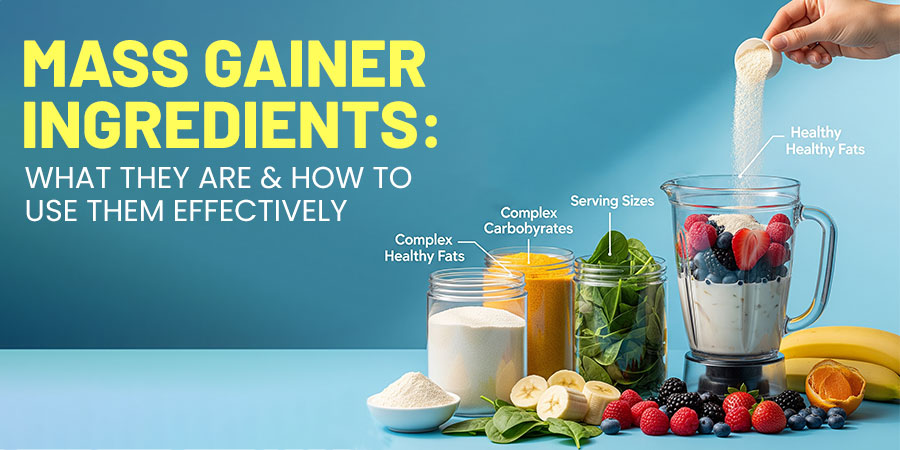
Gaining weight in a healthy and structured way can be just as much of a task as losing it. From quick responders to athletes undergoing rigorous training to skinny novices aiming to bulk up, gaining calories each day is no easy job. This is where mass gainers come into the picture. These high-calorie nutritional supplements provide the necessary calories for individuals to build size, gain lean mass, and recover well. But just what goes into these mass gainers, and what is the correct way to use them for optimum results?
This blog will elaborate on the mass gainer ingredients, their nutritional value, and the most effective ways to use them to fulfill your fitness goal.
What is Mass Gainer?
A mass gainer is a dietary supplement to help increase daily caloric intake using macronutrients-carbohydrate, protein, and fats-along with micronutrients such as vitamins and minerals. Mass gainers are primarily used in shakes and smoothies and are considered very high-calorie, usually containing 600 to 1200 calories per serving.
They are perfect for:
People who are naturally skinny, or hard gainers
- Athletes with high-calorie needs
- Bodybuilders in their bulking phase
- Patients recuperating from settings of illness or surgery
How to Make Mass Gainer
1. Carbohydrates: The Main Energy Supplier
These form the majority of calories in most mass gainers. Carbohydrates provide energy, replenish glycogen stores, and augment weight gain.
Common Types:
- Maltodextrin: A rapidly digesting complex carbohydrate derived from starch. It gives short-term energy and blends easily in shakes.
- Dextrose and Glucose: These are simple sugars introduced for an immediate energy boost, often post-workout.
- Oats, Sweet Potatoes, or Brown Rice Powder: These complex carbs, found in superior mass gainers, provide longer energy and fiber.
Nutritional Value:
4 calories are present in a gram of carbohydrate. In mass gainers, carbohydrates can be present from 100g to 250g per serving.
2. Protein: The Muscle Builder
Protein helps in the repair and building of muscle after workouts. Protein is one of the three major nutrients and forms the basis of any mass gainer.
Sources of Protein:
- Whey Protein Concentrate or Isolate: Easily digestible, high in branched-chain amino acids (BCAAs).
- Casein: Slow-digesting milk protein; great for use at night.
- Soy, Pea, or Rice Protein: Plant-based alternatives for vegan or lactose-intolerant individuals.
- Milk Protein Blend: This includes fast and slow proteins for sustained muscle repair.
Nutritional Value:
4 calories per gram of protein. Typical mass gainers contain 30g to 60g of protein per serving.
3. Fats: Energy and Hormonal Health
Good fats will provide extra calories and very much contribute to hormone formation, brain, and joint health.
Common Fat Sources:
MCT: Fat that can easily be absorbed and offer quick energy.
Sunflower oil, coconut oil, or flaxseed: Contain omega-3s and omega-6s for heart and joint health.
Nutritional Value:
9 calories are in each gram of fat. Most mass gainers would have between 10g to 20g of fat per serving.
4. Vitamins and Minerals: The Essential Nutrients
Micronutrients present in mass gainers help energy production, shield immune function, and support bones, and healing.
Important Micronutrients Include:
- B-vitamins: To convert food components into usable energy.
- Vitamin D and Calcium: For maintaining bone health and muscle contractions.
- Zinc and Magnesium: Muscle repair and immune support.
How to use mass gainer
If you are gaining weight and consuming more calories, you will also require more vitamins and minerals for metabolic functions and the prevention of nutrient deficiency.
5. Fiber and Digestive Enzymes for Better Absorption
High-calorie shakes can be very heavy. Therefore, mass gainers often provide high fiber and digestive enzymes to enhance absorption and lessen bloating.
Added Ingredients:
- Fiber: Inulin, Psyllium Husk—for gut health and regular digestion.
- Digestive Enzymes: Amylase, Lactase, and Protease break down carbs, lactose, and proteins for better absorption.
- Probiotics: Occasionally included for the support of gut flora.
6. Creatine and BCAAs: Muscle Strength & Recovery (Optional Add-Ins)
Some mass gainers go the extra mile by adding creatine, glutamine, or branched-chain amino acids (BCAAs).
Benefits:
- Creatine Monohydrate: Increases ATP production, improves strength, and enhances muscle size.
- BCAAs: Support muscle recovery, prevent fatigue, and trigger muscle protein synthesis.
- L-Glutamine: Improves muscle recovery and sustains immune function.
7. Flavoring and Sweeteners
To enhance taste, producers add in:
- Natural flavors like cocoa, vanilla, or strawberry
- Sweeteners like stevia, sucralose, or monk fruit
- Always check the label if you’re sensitive to artificial additives or want a cleaner supplement.
Using Mass Gainers Efficiently
Although it’s important to know what’s in your mass gainer, the effective use of a gainer is what results give.
When:
- Post-Workout: The right time to take a gainer for muscle repair and glycogen recovery.
- Between Meals: This will help in increasing the total caloric intake every day.
- Before Bed: Provides slow-digesting nutrients during sleep to prevent catabolism.
How to Consume:
- With Milk: For ultra-sweet calories and protein, in addition to being creamier.
- With Water: If you’d like a lighter shake.
- With Additions: Mix with bananas, peanut butter, or oats for a natural boost.
Dosage Tip: Start with half a serving to test how your body reacts to the product. Gradually increase the amount depending on how many calories you require and your goals for fitness.
Who Mass Gainers Benefit?
Mass gainers are ideal for:
- Underweight individuals
- Ectomorph body types (naturally lean)
- Teenagers and adults with high energy expenditure
- Athletes in high-intensity training
Who Should Avoid Them?
Avoid mass gainers if:
- You have diabetes (some contain a lot of sugar)
- You gain fat easily
- You prefer whole-food nutrition.
- You have a sedentary lifestyle.
Final Thoughts
Mass gainers, when used judiciously, could be a great supplement to your diet. Understanding the ingredients in your mass gainers—carbohydrates, proteins, fats, vitamins, digestive aids, and enhancers—will give you enough information to select one that best suits your body type and fitness aim. The right mass gainers will certainly help you bulk, support workout endeavors, or even meet daily calorie goals faster but, only when coupled with the right diet and regular training.