Hydration and electrolyte balance are vital components of optimal performance for any athlete, gym-goer, or any other perspiring person in hot weather. Although buying sports drinks is a great aid, they can be loaded with added sugar, artificial colors, and preservatives. The answer? Isotonic drink-making in your very home-it is cheaper, a tad healthier, and just as effective! In this blog, we will cover how to make isotonic drinks and its benefits.
What Is An Isotonic Drink?
An isotonic drink is a liquid with concentration patterns similar to those of salts, sugars, and electrolytes found in the human body. Thus, it can be absorbed very quickly in the bloodstream and acts very much like a rehydrating, energizing, and recovering electrolyte after physical activity.
Benefits of Isotonic Drinks
- Rehydration in a Jiffy
This is a fast absorption mechanism of how electrolytes replace lost fluids through sweating.
- Energy Boost
These drinks usually contain the minimum amount of glucose or sugars from organic sources. They help restore the energy levels for endurance activities.
- Electrolyte Balance
When sweating, sodium, potassium, magnesium, and calcium are lost through sweat glands. An isotonic drink can replenish these minerals, hence lessening the chances of getting cramps, fatigue, and lightheadedness.
- Performance Improvement
By regulating fluid levels and energy, isotonic drinks can maintain endurance and concentration, especially under prolonged training or exercise conditions.
- Economical & Customizable
These homemade drinks allow adding ingredients — no artificial additives, excess sugars, or preservatives.
When Should You Drink an Isotonic Drink?
During long or hard exercise (60 minutes or more).
After intensive training sessions or competitions.
When the weather is hot and the humidity is quite high, there is a lot of sweating.
During illnesses such as fever or diarrhea, when recovering from the loss of body fluids.
Before and after matches in games and long outdoor activities.
Homemade Isotonic Drink Recipe & Ingredients
Preparing your isotonic drink is not at all complicated. Some might say that they already have the necessary ingredients in their kitchen.
Basic Homemade Isotonic Drink Recipe
isotonic drink Ingredients:
- 500 m water (filtered or boiled and cooled)
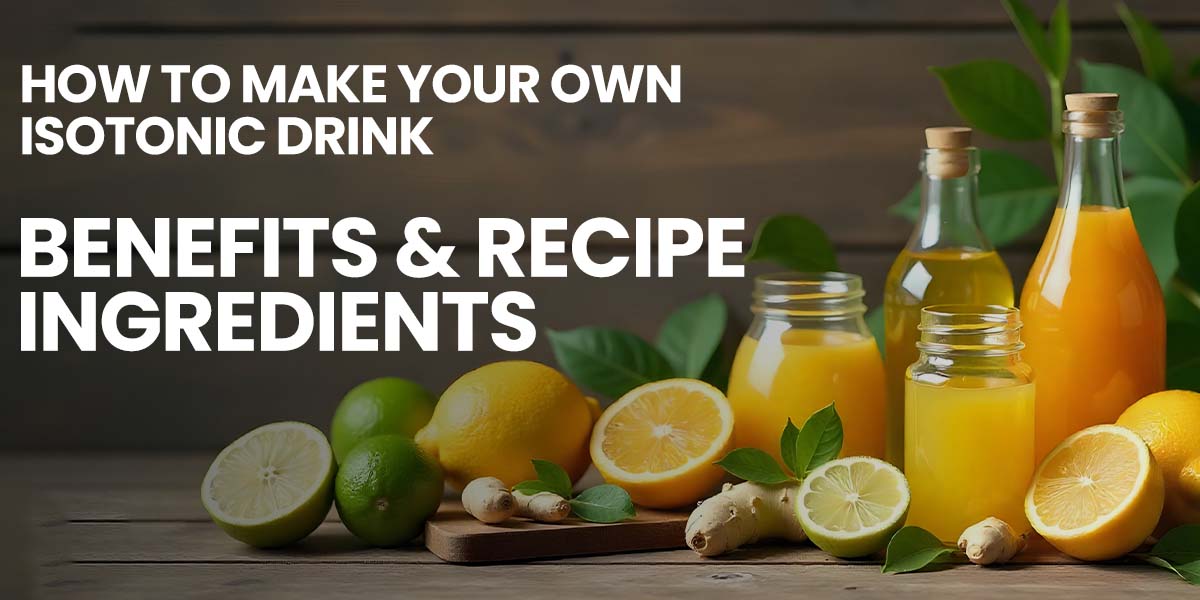
- 250 m natural fruit juice (orange, lemon, or lime rich in vitamin C and natural sugars)
- 1/4 tsp salt (preferably sea salt or pink Himalayan salt for mineral content)
- 1 tbsp honey or natural sweetener (for glucose and taste)
Optional Add-ins:
- 1/4 tsp baking soda (helps regulate pH and adds sodium bicarbonate)
- 1 tbsp chia seeds (for more hydration and fiber)
- Electrolyte drops or magnesium supplement (for more minerals added)
How To Make Your Own Isotonic Drink
- Mix liquids: In a large jug or bottle, mix water and natural fruit juice.
- Add salt: Stir in the salt until fully dissolved.
- Add honey: Mix in honey or your chosen natural sweetener. Stir well!
- Chill and shake: Refrigerate or add to ice. Shake or stir before use.
- Consume fresh: Best consumed the same day, but can be stored for 1–2 days in the fridge.
Ingredient Breakdown & Why They Matter
Fruit juice Glucose and vitamin C Salt (sodium) because it replaces sodium lost through sweat Honey Natural carbohydrate source for energy Baking soda Buffers lactic acid and adds sodium bicarbonate Chia seeds Absorb water and help sustain hydration.
Flavor Variations to Try Citrus Mint Cooler: Lemon Juice + Orange Juice + Mint Leaves.
Tropical Boost: Pineapple Juice + Coconut Water + Pink Salt. Berry Electrolyte Drink: Mixed Berry Juice + Lime Juice + Honey. Green Isotonic Drink: Cucumber Water + Lemon + Himalayan Salt.
Those combinations keep hydrating and exciting, but also provide additional health benefits from antioxidants and vitamins.
Best Practices Tips
- Sweetness Adjustment: Modify sweetness according to activity level or to taste.
- Consume in small sips: Especially during a workout or hot weather.
- Do not oversalt: Too much salt makes the drink taste salty and may thus affect blood pressure.
- Keep it fresh: Long-term storage lessens the nutrient value.
Who Should Avoid Isotonic Drinks?
Though largely safe, such drinks should be kept away from people with high blood pressure, kidney problems, and sodium-restricted diets. They should first consult with their doctors. People with diabetes or who are controlling sugar intake should choose the low-sugar variant or a sugar-free sweetener like stevia.
Wrapping It Up
An isotonic drink is simple but powerful for remaining hydrated, energized, and electrolyte-balanced, especially when sweating profusely. Instead of packaged sources involved in unwanted sugars and additives, making one’s drink gives absolute control over what one consumes. In straightforward words, a few ingredients can be used to concoct a healthy drink that is refreshing and boosts performance and recovery.
Mix your isotonic drink next time you’re at the gym, pounding the pavement for a long run, or spending hours under the sun — your body deserves nothing less than great fuel!