Vegan protein powder has witnessed a meteoric rise in popularity among athletes and fitness fans as well as health-conscious individuals in recent years. Whether you’re vegan, lactose-free, or simply seeking to diversify your protein sources, vegan protein powder is a great alternative to animal protein.
This blog will explain everything you need to know, from Vegan protein powder ingredients to important health benefits, and even a step-by-step DIY recipe for making your vegan protein powder at home.
What is Vegan Protein Powder?
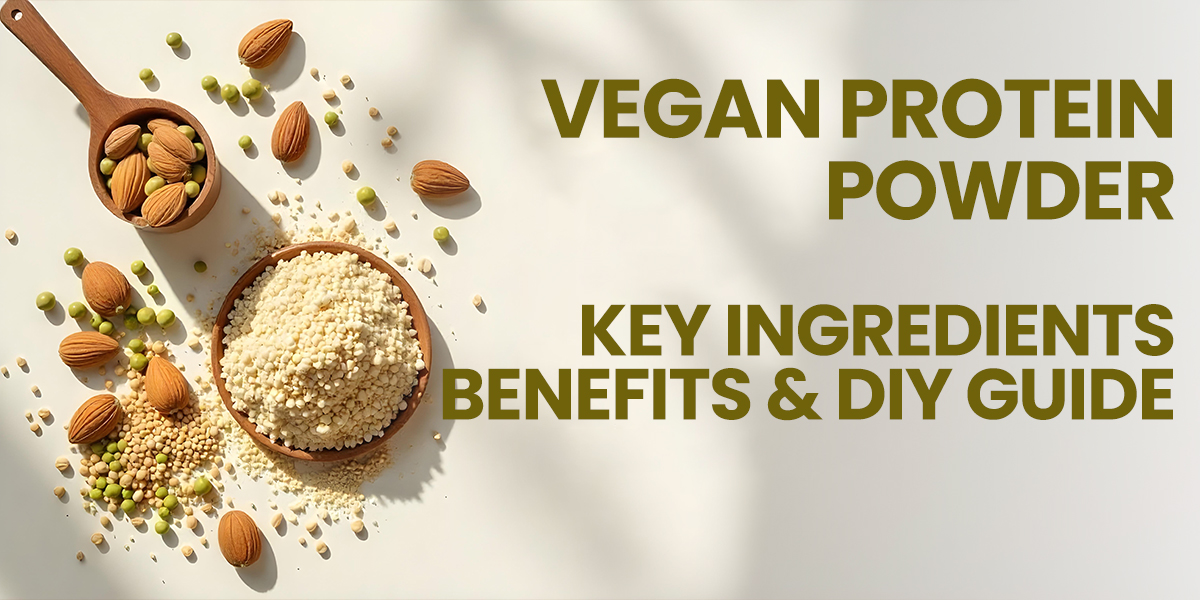
Vegan protein powder is a dietary supplement made from 100% plant protein sources. Unlike whey or casein (derived from dairy), vegan protein powders are usually made from legumes, grains, seeds, and nuts. Because they do not contain any animal products, they can be safely consumed by vegans, vegetarians, or those with dairy allergies or sensitivities. Common sources of protein powders are pea, brown rice, hemp, pumpkin seed, soy, and blends of various plant proteins for a complete amino acid profile.
Key Ingredients in Vegan Protein Powder
The nutritional quality of the vegan protein powder depends primarily on its source ingredients. A few of the most commonly used nutrient-dense sources are:
- Pea Protein
Source: Derived from yellow split peas.
Benefits: Provides BCAAs, especially leucine, isoleucine, and valine, which are great for muscle recovery and growth.
Digestibility: So gentle on the stomach that it is considered hypoallergenic.
- Brown Rice Protein
Source: Isolated protein from brown rice.
Benefits: High in cysteine and methionine (sulfur-containing amino acids).
- Hemp Protein
Source: Hemp seeds are ground.
Benefits: Omega-3 and omega-6 fatty acids, fiber, and antioxidants.
Digestibility: It is absorbable with nutrient density.
- Soy Protein
Source: Soybeans from which oil was removed.
Benefits: Plant protein is considered a complete protein; it contains all 9 essential amino acids.
- Pumpkin Seed Protein
Source: Protein from pressed pumpkin seeds.
Benefits: Its magnesium, zinc, iron, and healthy fats contribute immensely to good health.
- Sunflower Seed Protein
Source: Made from sunflower seeds.
Benefits: Allergen-friendly choice, rich in vitamin E and essential amino acids.
- Chia Seed & Flaxseed Protein
Source: Milled chia or flax seeds.
Benefits: Full of fiber, omega-3 fatty acids, and antioxidants that stimulate
digestion and heart health.
Top Vegan Protein Powder Benefits
Switching to plant-based protein powders will thus go a long way to support your health and our environment, too. Here are some major benefits:
Supports Muscle Growth and Recovery
Vegan protein powders – especially blends containing different plant proteins – can supply all essential amino acids that the body requires for muscle protein synthesis. They repair muscle tissue after workouts, relieve soreness, and promote lean muscle growth.
Good for Digestion
Many vegan protein powders are free of lactose, gluten, and synthetic additives, making them gentler on the gastrointestinal tract. Moreover, sources like hemp and flaxseed also happen to be high in fiber, which is conducive to maintaining good digestion.
Supports Heart Health
Plant proteins usually provide healthy fats, antioxidants, and phytochemicals that work to reduce inflammation and help the cardiovascular system.
Helps Control Weight
Protein increases the feeling of fullness, and it is believed that this reduces total caloric intake. Good vegan protein powder can thus fit into a weight-loss or weight-maintenance plan.
Keeps Blood Sugar Stable
Plant proteins with a low glycemic index help avoid sudden spikes in blood sugar level, and these are good for those with any problem with sugar regulation; that is, diabetes.
Eco-Friendly and Well-Sustained
Production of plant-based proteins tends to be more environmentally advantageous since it utilizes less water and land and is energetically less demanding as in the case of animal sources.
Allergen-Free
Vegan protein powders provide a fantastic alternative for those who experience allergies to dairy, eggs, or particular animal proteins.
How To Pick The Right Vegan Protein Powder
Some things to keep in mind when shopping for vegan protein powders:
- Choose Stadium Proteins: Holistic blends that combine various plant sources (for example, pea + rice + hemp) offer a balanced amino acid profile.
- Look For Added Sugar: Stay true to unsweetened and naturally sweetened products (such as stevia or monk fruit).
- Ingredients Lists: Get rid of products that contain avoidable fillers, artificial colorants, or preservatives.
- Consider digestibility: If you have a sensitive stomach, then start with smaller servings or go with easy-to-digest options such as hemp or pea.
How To Make Vegan Protein Powder
DIY vegan protein powder can save quite a bit of cash and allow you to control flavor and ingredients. Moreover, there are several vegan protein powder uses, let’s look into it:
Ingredients
- 1 cup (10 oz) pea protein powder (unsweetened)
- 1 cup (10 oz) brown rice protein powder
- ½ cup (5 oz) hemp protein powder
- ½ cup (5 oz) ground flaxseed
- ½ cup (5 oz) chia seed powder
- ¼ cup (1 oz) cocoa powder (for flavor, optional)
- 2 tbsp (0.6 oz) cinnamon (optional, for aroma and antioxidants)
Instructions
- Measure and Prepare Ingredients: Ensure that all your ingredients are dry and well-powdered.
- Mix Thoroughly: In a big mixing bowl, pour all the ingredients together. Stir them until you can see they are combined well.
- Store Properly: Lastly, pour the mixture into an airtight container and store it in a cool and dry location.
How to Use Vegan Protein Powder in Your Diet
Some suggestions for meal preparation:
- Smoothies & Shakes: Mix with almond milk, banana, and spinach for a fast breakfast.
- Baking: The powder can be used to create pancakes, muffins, and protein bars.
- Energy Balls: Combine with nut butter, oats, and dates for a freezer-ready snack.
- Soups & Stews: Stir in for a protein boost to your steaming soups.
Potential Side Effects
Vegan proteins as a whole tend to be safe, but here are some pointers on things to be aware of:
- Overuse: Too much protein can lead to discomfort in the intestines and strain on the kidneys.
- Allergies: Check for allergenic ingredients like soy or nuts.
- Quality Concerns: Go for reputable brands to avoid contamination from heavy
metals or low-quality ingredients.
Final Thoughts
Benefits to muscle growth, digestion, heart health, and sustainability are just a few among many reasons why vegan protein is a good addition to a balanced diet. Although plant sources are not a complete source of amino acids, they can provide sufficient amounts of protein without feeding the animal form.
Whether you purchase a high-quality blend or make it yourself right at home, vegan protein powder fits pretty well in smoothies, snacks, or meals, all of which help you stay energized, build strength, and keep you on track with your goals while they care for the planet.